The Dry Eye Center at Eyes on LA
Dry, irritated eyes can affect every part of your day—from reading and working on the computer to driving and enjoying time outdoors.
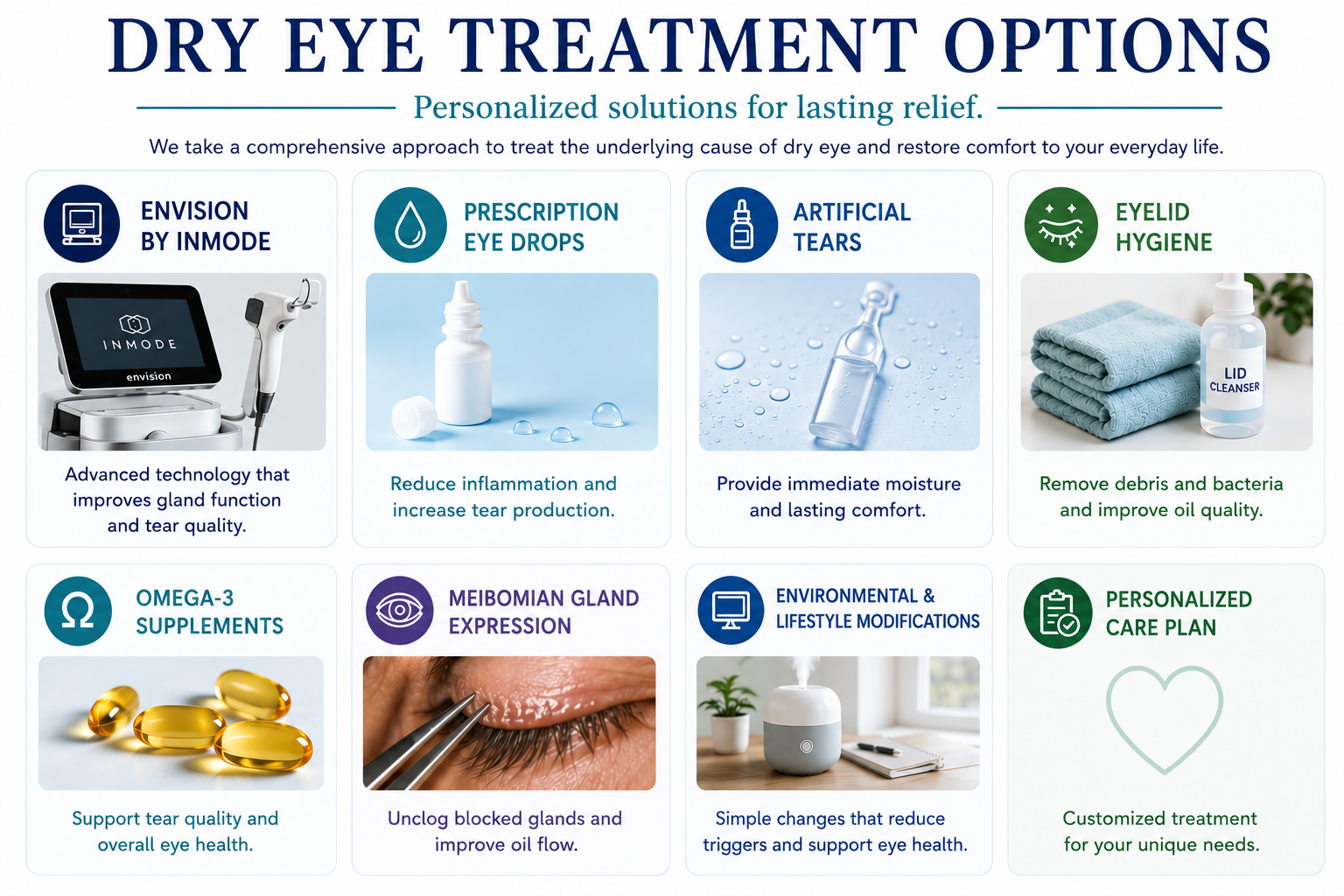
At Eyes on LA Optometry, we go beyond artificial tears by identifying the underlying cause of your dry eye and creating a personalized treatment plan using advanced diagnostic technology and modern treatment options.
What Causes Dry Eye?
Dry eye is a chronic condition that occurs when your eyes do not produce enough healthy tears or when tears evaporate too quickly.
Common causes include:
Meibomian Gland Dysfunction (MGD)
Aging
Hormonal changes
Screen time
Contact lens wear
Autoimmune disease
Certain medications
Environmental factors
Common Symptoms of Dry Eye
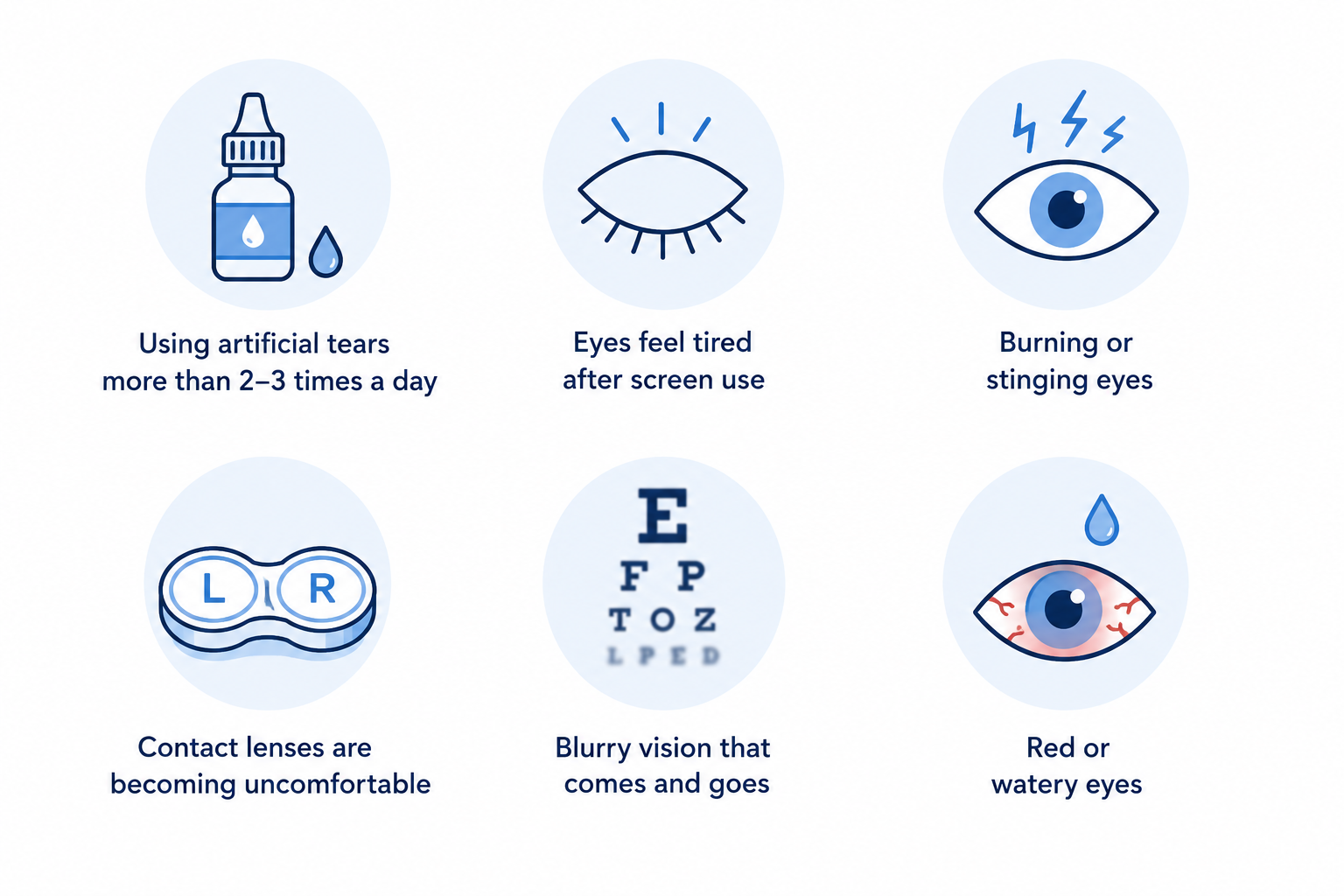
Burning
〰️
Stinging
〰️
Grittiness
〰️
Red eyes
〰️
Watery Eyes
〰️
Blur
〰️
Burning 〰️ Stinging 〰️ Grittiness 〰️ Red eyes 〰️ Watery Eyes 〰️ Blur 〰️
Our Comprehensive Dry Eye Evaluation
Instead of simply treating symptoms, we evaluate the underlying cause.
Include:
👁️ Tear Film Evaluation
💧 Meibomian Gland Assessment
🔬 Ocular Surface Examination
📝 Lifestyle Assessment
Advanced Dry Eye Therapy with Envision by INMODE
Envision is the new in-office non-surgical platform that treats the underlying causes of dry eye rather than simply masking symptoms. With 2 precision treatment settings:
Forma-I: bipolar radiofrequency (RF)
Lumecca-I: intense pulsed light (IPL)
Benefits:
✓ Non-invasive
✓ Comfortable treatment
✓ Little to no downtime
✓ Treats Meibomian Gland Dysfunction
✓ Helps improve tear quality
✓ Personalized treatment plans
-
Most treatments take approximately 20–30 minutes, depending on the treatment performed.
-
Most patients find treatment comfortable with minimal downtime.
-
Treatment recommendations vary based on the severity of your dry eye and your response to therapy. Some patients benefit from a series of treatments followed by maintenance visits.
-
Some patients continue using lubricating drops, while others find they need them much less frequently after treatment.
-
Ideal candidates include patients who:
Have chronic dry eyes
Use artificial tears frequently
Have MGD
Experience burning or fluctuating vision
Have contact lens discomfort
Spend long hours on computers
Have not found relief with eye drops alone
Frequently Asked Questions Related to Dry Eyes
-
Dry eye is often a chronic condition, but with proper treatment, symptoms can usually be managed very effectively.
-
Dry eye can result from many factors, including aging, meibomian gland dysfunction (MGD), prolonged screen time, hormonal changes, certain medications, autoimmune diseases, contact lens wear, and environmental conditions such as wind or dry air.
-
Insurance coverage varies depending on the evaluation and treatment recommended. Our team will review your benefits and discuss any costs before treatment begins.
-
Excessive tearing is actually a common symptom of dry eye. When the eyes become dry and irritated, they may produce an overflow of poor-quality reflex tears that do not adequately lubricate the eye.
-
Yes. An unstable tear film can cause vision to fluctuate throughout the day, especially while reading, driving, or using a computer.
-
Mild symptoms may improve temporarily, but untreated dry eye often persists or gradually worsens over time. Early diagnosis and treatment can help prevent ongoing discomfort and damage to the ocular surface.
-
Many patients with dry eye can continue wearing contact lenses. We may recommend different lens materials, replacement schedules, or additional treatments to improve comfort and support healthy lens wear.
-
If you experience persistent dryness, irritation, redness, blurry vision, or rely on artificial tears frequently, it's a good idea to schedule a comprehensive dry eye evaluation. Identifying the underlying cause allows us to recommend the most effective treatment for your individual needs.