Dry Eye Treatment & IPL in Moorpark & West Hills
The Dry Eye Center at Eyes on LA
Dry, irritated eyes can affect every part of your day—from reading and working on a computer to driving, wearing contact lenses, and enjoying time outdoors.
At Eyes on LA Optometry, we look beyond temporary symptom relief to identify the factors contributing to your dry eye. Our doctors provide comprehensive evaluation and personalized treatment for dry eye disease, evaporative dry eye, and meibomian gland dysfunction (MGD) using advanced diagnostic technology and modern treatment options, including in-office therapies when appropriate.
Comprehensive dry eye care is available at our Moorpark and West Hills locations.
What Causes Dry Eye?
Dry eye is a chronic condition that occurs when your eyes do not produce enough healthy tears or when tears evaporate too quickly.
Common causes include:
Meibomian Gland Dysfunction (MGD)
Aging
Hormonal changes
Screen time
Contact lens wear
Autoimmune disease
Certain medications
Environmental factors
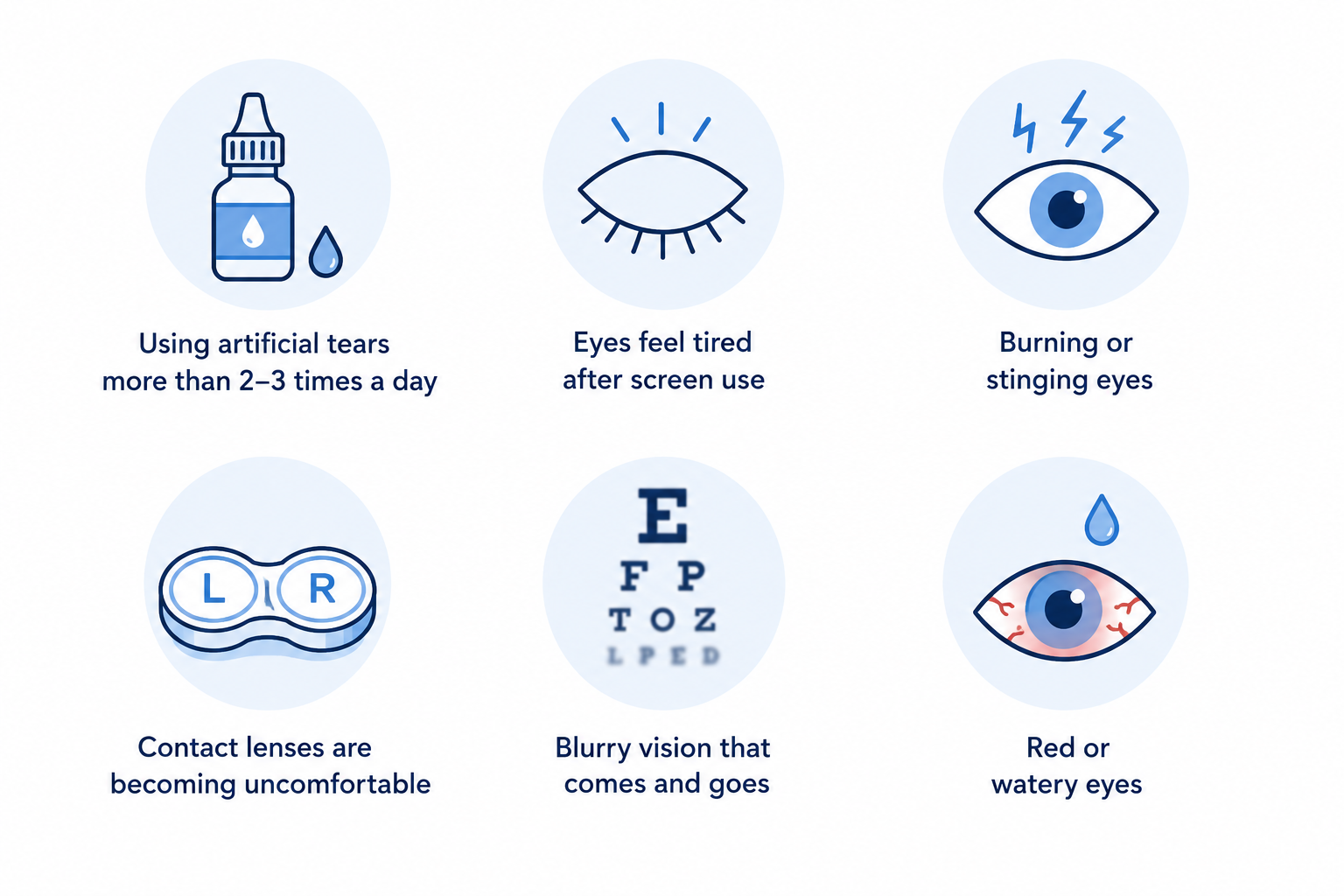
Common Symptoms of Dry Eye
Burning
〰️
Stinging
〰️
Grittiness
〰️
Red eyes
〰️
Watery Eyes
〰️
Blur
〰️
Burning 〰️ Stinging 〰️ Grittiness 〰️ Red eyes 〰️ Watery Eyes 〰️ Blur 〰️
What Type of Dry Eye Do I Have?
Dry eye disease can develop for different reasons, and many patients have more than one contributing factor. Understanding what is causing your symptoms is important because the most appropriate treatment depends on the type of dry eye you have.
-
Evaporative dry eye occurs when tears evaporate from the surface of the eye too quickly. One of the most common contributors is meibomian gland dysfunction (MGD), in which the oil-producing glands along the eyelids become blocked or don't function properly.
Without a healthy oil layer, the tear film can become unstable, leading to burning, irritation, fluctuating vision, redness, or watery eyes.
-
Aqueous-deficient dry eye occurs when the eyes don't produce enough of the watery portion of the tear film to adequately lubricate the ocular surface.
Age, certain medications, medical conditions, and other factors may contribute to decreased tear production. Patients may experience persistent dryness, burning, irritation, or a gritty sensation.
-
Many patients don't fit neatly into one category. Mixed dry eye occurs when decreased tear production and excessive tear evaporation are both contributing to symptoms.
This is one reason why simply knowing that your eyes “feel dry” isn't always enough to determine the best treatment.
Finding the Cause Matters
Dry eye symptoms can feel very similar even when the underlying causes are different. A comprehensive dry eye evaluation allows our doctors to assess the tear film, meibomian glands, eyelids, and ocular surface to better understand what's contributing to your symptoms.
At Eyes on LA Optometry, we use those findings to develop a personalized treatment plan rather than taking a one-size-fits-all approach to dry eye care.
What Is Meibomian Gland Dysfunction (MGD)?
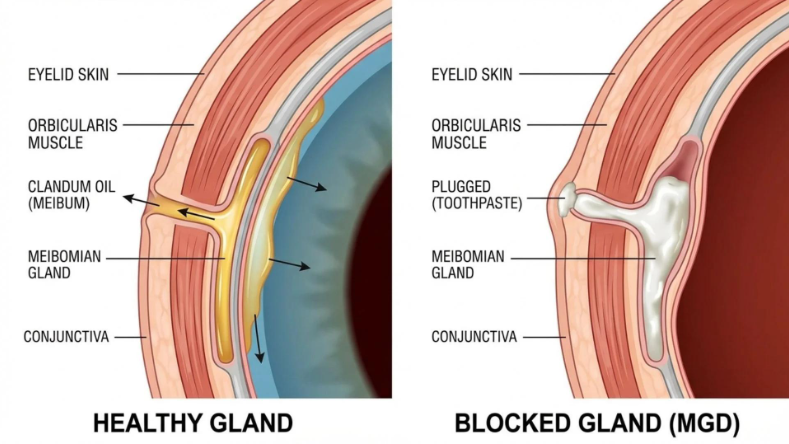
Meibomian glands are tiny oil-producing glands located along the edges of your upper and lower eyelids. They release oils, called meibum, that form part of the outer layer of your tear film. This oil layer helps slow tear evaporation and keeps your eyes comfortable between blinks.
When the glands become blocked, inflamed, or don't produce healthy oils, the condition is called meibomian gland dysfunction (MGD).
MGD is one of the most common contributors to evaporative dry eye disease. When the protective oil layer of the tear film isn't functioning properly, tears can evaporate too quickly, which may leave the surface of the eye dry and irritated.
Symptoms of MGD May Include:
Burning, stinging, or irritated eyes
Dryness or a gritty feeling
Fluctuating or blurry vision
Redness
Excessive watering
Sensitivity to light
Eye fatigue or discomfort
Symptoms that worsen with prolonged screen use
Contact lens discomfort
Symptoms that are worse toward the end of the day
Some people with MGD may experience significant symptoms even when their eyes don't simply feel “dry.” Excessive tearing, fluctuating vision, and contact-lens discomfort can also be signs of an unhealthy tear film.
Why Treating the Meibomian Glands Matters
Artificial tears can provide temporary relief, but they don't necessarily address problems with the meibomian glands themselves.
That's why a comprehensive dry-eye evaluation should look beyond tear quantity and evaluate the health and function of the meibomian glands and the entire ocular surface.
At Eyes on LA Optometry, we evaluate the factors contributing to your dry eye symptoms and create a treatment plan based on your individual needs. For appropriate patients, treatment may include Lumecca-I IPL and Forma-I radiofrequency (RF) as part of a comprehensive approach to managing MGD and dry eye.
Comprehensive Dry Eye & MGD Evaluation
Dry eye symptoms can have many different causes, which is why identifying the factors contributing to your symptoms is an important first step in developing an effective treatment plan. At Eyes on LA Optometry, our dry eye evaluation looks at your symptoms, lifestyle, tear film, ocular surface, blinking, and meibomian gland health to better understand what may be causing your dry eye.
📝 Thorough Dry Eye History 📝
Your evaluation begins with a detailed discussion of your symptoms and health history. We also look for environmental and lifestyle factors that may contribute to dry eye, such as prolonged screen use, reduced blinking, contact lens wear, air conditioning or heating, medications, and other daily habits.
Understanding when your symptoms occur and what makes them better or worse can provide important clues about the underlying cause.
💧Tear Film & Ocular Surface Evaluation💧
Using sodium fluorescein dye, our doctors examine the tear film and ocular surface under magnification. This allows us to evaluate how quickly the tear film begins to break up or evaporate and look for areas of punctate corneal staining (superficial punctate keratitis) that may indicate ocular surface dryness or irritation.
The location and pattern of staining can also provide useful information. Certain patterns may suggest contributing factors such as incomplete blinking or sleeping with the eyelids partially open, which can expose portions of the ocular surface and contribute to dryness.
👁️Meibomian Gland Imaging👁️
Because meibomian gland dysfunction is a common contributor to evaporative dry eye, we evaluate the structure of the meibomian glands within the eyelids.
Imaging allows our doctors to look for changes in gland structure, including irregularities, shortening, or gland dropout, which can help us better understand the health of the glands and their potential role in your symptoms.
🔬Meibomian Gland Expression🔬
We also assess how the glands are functioning by gently expressing them and evaluating the quality of the meibum—the natural oil produced by the meibomian glands.
Healthy meibum helps form the protective outer layer of the tear film and slows tear evaporation. Changes in the quality or flow of these oils can be an important sign of meibomian gland dysfunction and can help guide treatment recommendations.
From Diagnosis to a Personalized Treatment Plan
No single dry eye treatment is appropriate for everyone. By combining your history with an evaluation of the tear film, ocular surface, blink function, and meibomian glands, our doctors can better identify the factors contributing to your dry eye and recommend treatment based on those findings.
Depending on your individual needs, treatment may include at-home therapies, changes to daily habits, or advanced in-office treatment for meibomian gland dysfunction and evaporative dry eye.
Advanced Dry Eye Treatment with IPL & Radiofrequency
For many patients with evaporative dry eye, the problem begins with meibomian gland dysfunction (MGD). When the meibomian glands become blocked or produce poor-quality oils, the protective oil layer of the tear film can become unstable, allowing tears to evaporate too quickly.
After evaluating your tear film, ocular surface, and meibomian glands, our doctors may recommend advanced in-office treatment when appropriate.
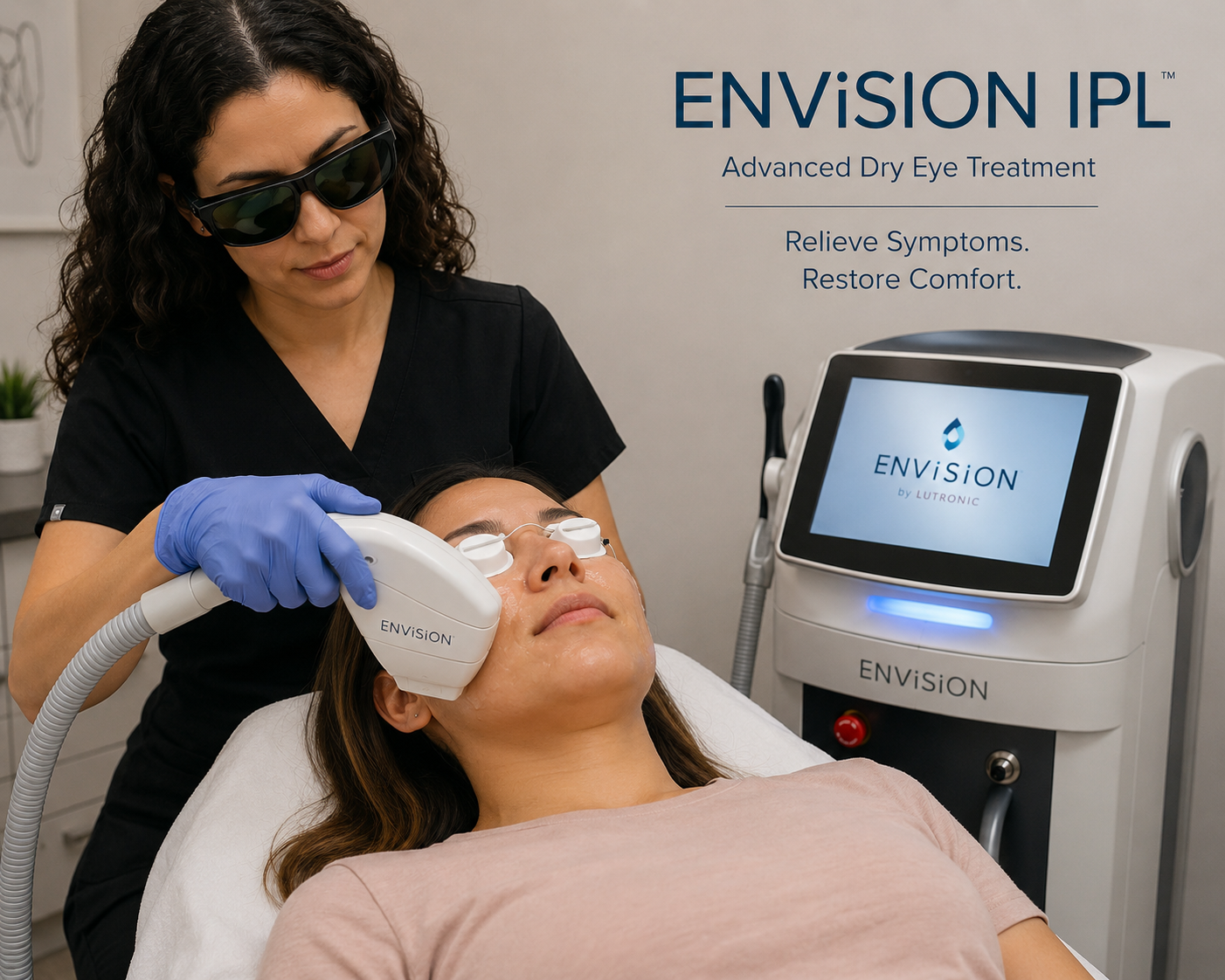
At Eyes on LA Optometry, we offer Lumecca-I Intense Pulsed Light (IPL) and Forma-I Radiofrequency (RF) using the Envision platform by InMode as part of our personalized approach to managing dry eye and meibomian gland dysfunction.
Lumecca-I IPL for Dry Eye & MGD
Intense Pulsed Light (IPL) uses controlled pulses of light applied to the skin around the eyes. IPL has been studied as a treatment for dry eye associated with meibomian gland dysfunction and may help improve signs and symptoms of MGD-related dry eye.
IPL may be particularly helpful when inflammation and abnormal blood vessels around the eyelids are contributing to meibomian gland dysfunction.
The goal is not simply to temporarily lubricate the eyes, but to address factors that may be contributing to an unhealthy tear film.
Because IPL is not appropriate for every patient, our doctors first evaluate your ocular surface, tear film, meibomian glands, skin type, medical history, and other relevant factors to determine whether IPL may be appropriate for you.
Forma-I Radiofrequency for Meibomian Gland Dysfunction
Forma-I Radiofrequency (RF) delivers controlled thermal energy to the tissues around the eyes.
The gentle, controlled heating can help warm the meibomian glands and soften thickened meibum—the natural oil produced by these glands. This can make the oils easier to express and may help improve meibomian gland function and tear-film quality.
For patients with obstructed or poorly functioning meibomian glands, Forma-I may be incorporated into a broader treatment plan based on the findings of the dry eye evaluation.
Benefits of IPL and RF:
✓ Non-invasive
✓ Comfortable treatment
✓ Little to no downtime
✓ Treats MGD
✓ Helps improve tear quality
✓ Personalized treatment plans
Why Might We Use IPL and RF Together?
IPL and radiofrequency work differently, which is why some patients may benefit from using the technologies together.
IPL may help address inflammatory and vascular factors associated with MGD, while RF provides controlled heat that can help soften meibomian gland secretions and facilitate gland expression.
Depending on what we find during your evaluation, our doctors may recommend IPL, RF, a combination of the two, or a different approach entirely.
Treatment Is Personalized to Your Eyes
Not everyone with dry eye needs IPL or radiofrequency.
Your treatment recommendations are based on what we find during your dry eye evaluation—including your symptoms, tear-film stability, ocular-surface findings, meibomian gland imaging, and the quality and expressibility of your meibum.
Our goal is to identify the factors contributing to your dry eye and develop a treatment plan specifically for your eyes rather than taking a one-size-fits-all approach.
IPL & Radiofrequency for Dry Eye FAQs:
-
Most treatments take approximately 20–30 minutes, depending on the treatment performed.
-
Most patients find treatment comfortable with minimal downtime.
-
Treatment recommendations vary based on the severity of your dry eye and your response to therapy. Some patients benefit from a series of treatments followed by maintenance visits.
-
Some patients continue using lubricating drops, while others find they need them much less frequently after treatment.
-
Ideal candidates include patients who:
Have chronic dry eyes
Use artificial tears frequently
Have MGD
Experience burning or fluctuating vision
Have contact lens discomfort
Spend long hours on computers
Have not found relief with eye drops alone
-
IPL (Intense Pulsed Light) and radiofrequency (RF) treat dry eye in different ways. IPL uses controlled pulses of light to help reduce inflammation and support healthier meibomian gland function, while radiofrequency uses gentle heat to help soften thickened oils and improve the flow of the meibomian glands. Depending on the cause and severity of your dry eye, your optometrist may recommend IPL, radiofrequency, or a combination of both as part of your personalized treatment plan.
Personalized Dry Eye Care From Our Optometrists
Dr. Biana Ohanian and Dr. Eliana Goncuian provide personalized dry eye evaluations and treatment at Eyes on LA Optometry. Rather than treating symptoms alone, our doctors evaluate the underlying factors contributing to dry eye and develop an individualized treatment plan based on each patient's needs.
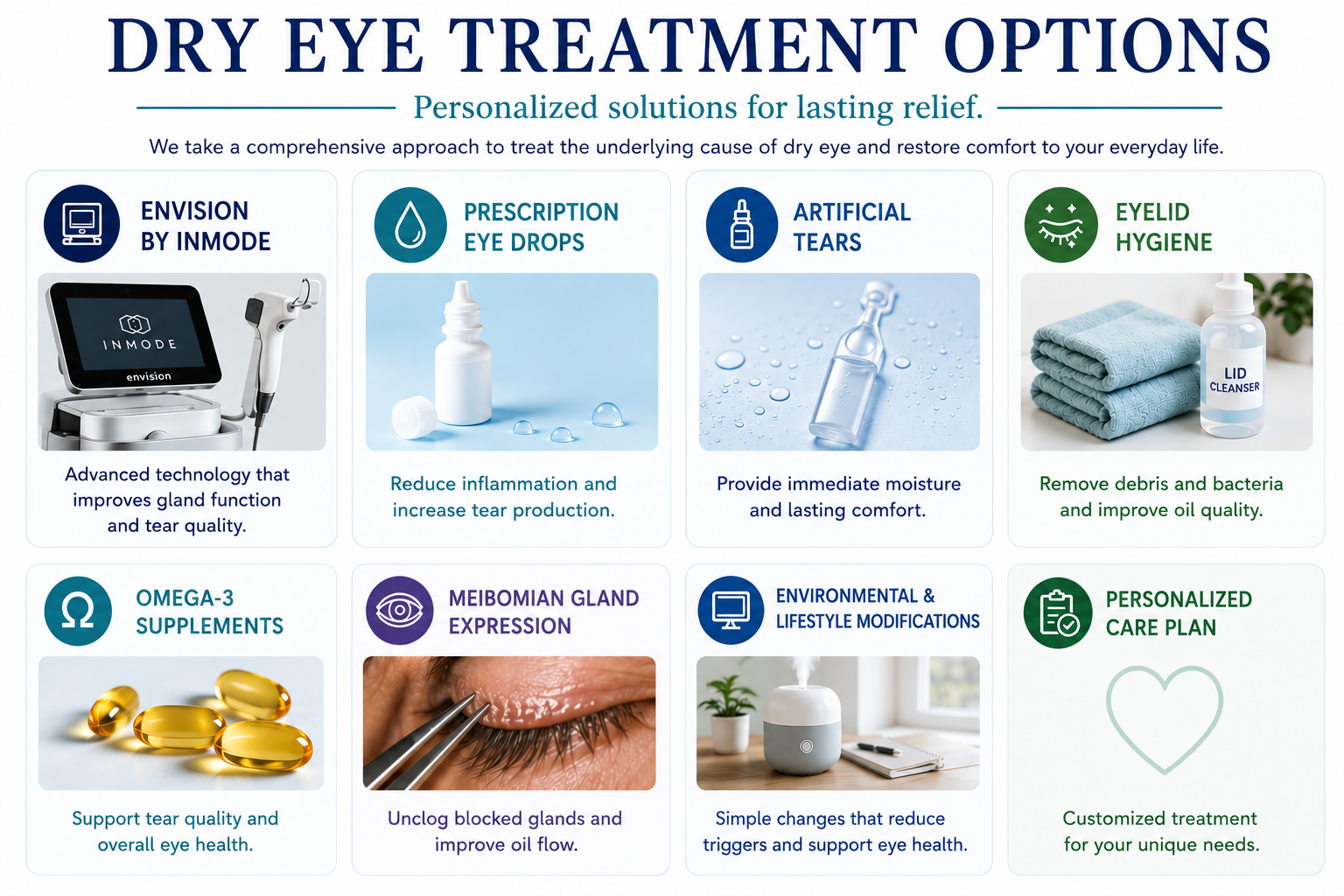
Dry Eye Treatment in Moorpark & West Hills
Eyes on LA Optometry provides comprehensive dry eye evaluations and advanced treatment options at our Moorpark and West Hills locations, serving patients throughout the surrounding Ventura County and San Fernando Valley communities.
Moorpark Office → West Hills Office →
251 W Los Angeles Ave, 7325 Medical Center Dr, #208
Moorpark, CA, 93021 West, Hills, CA, 91307
Frequently Asked Questions Related to Dry Eyes
-
Dry eye is often a chronic condition, but with proper treatment, symptoms can usually be managed very effectively.
-
Dry eye can result from many factors, including aging, meibomian gland dysfunction (MGD), prolonged screen time, hormonal changes, certain medications, autoimmune diseases, contact lens wear, and environmental conditions such as wind or dry air.
-
Insurance coverage varies depending on the evaluation and treatment recommended. Our team will review your benefits and discuss any costs before treatment begins.
-
Excessive tearing is actually a common symptom of dry eye. When the eyes become dry and irritated, they may produce an overflow of poor-quality reflex tears that do not adequately lubricate the eye.
-
Yes. An unstable tear film can cause vision to fluctuate throughout the day, especially while reading, driving, or using a computer.
-
Dry eye is often a chronic condition, and symptoms may come and go or worsen depending on the underlying cause. A comprehensive dry eye evaluation can help identify contributing factors and determine the most appropriate treatment.
-
Many patients with dry eye can continue wearing contact lenses. We may recommend different lens materials, replacement schedules, or additional treatments to improve comfort and support healthy lens wear.
-
If you experience persistent dryness, irritation, redness, blurry vision, or rely on artificial tears frequently, it's a good idea to schedule a comprehensive dry eye evaluation. Identifying the underlying cause allows us to recommend the most effective treatment for your individual needs.