
Keratoconus & Scleral Contact Lenses in West Hills & Moorpark
Specialized Vision Care for Keratoconus & Irregular Corneas
Keratoconus can make everyday vision increasingly difficult as the cornea becomes thinner and changes shape. Glasses or traditional soft contact lenses may not always provide the clear, stable vision you need.
At Eyes on LA Optometry, we provide personalized specialty contact lens evaluations and fittings for patients with keratoconus, irregular corneas, high prescriptions, and other challenging vision needs.
Our doctors evaluate the shape and health of your cornea, your current vision correction, your comfort, and your lifestyle to determine whether a specialty contact lens may be appropriate for you.
We offer scleral and corneal RGP contact lens fittings at our Moorpark and West Hills offices.
What is Keratoconus?
Keratoconus is a condition in which the cornea—the clear front surface of the eye—gradually becomes thinner and changes from its normal rounded shape.
As the cornea becomes more irregular, it can cause:
Blurry or distorted vision
Increasing nearsightedness or astigmatism
Difficulty seeing clearly with glasses
Frequent prescription changes
Glare or halos around lights
Increased sensitivity to light
Difficulty driving at night
Eye strain or visual fatigue
Keratoconus can affect each eye differently, and its progression varies from person to person.
If you have noticed that your prescription is changing frequently or that glasses no longer provide the quality of vision you once had, a comprehensive eye examination and corneal evaluation can help determine what may be contributing to your symptoms.
How do Scleral Lenses Help With Keratoconus?
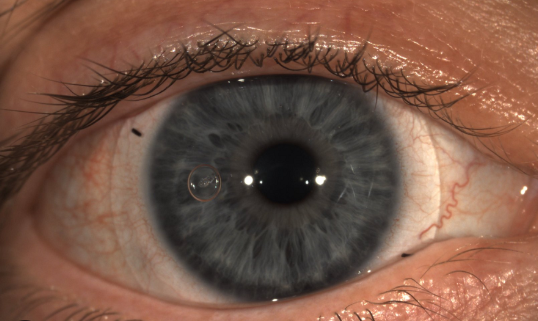
Scleral contact lenses are large-diameter rigid gas permeable lenses that rest primarily on the white part of the eye rather than directly on the irregular corneal surface.
The space between the lens and cornea is filled with preservative-free saline, creating a smooth optical surface over the irregular cornea.
For many patients with keratoconus, this can provide:
Clearer, More Stable Vision
The smooth optical surface of a scleral lens can compensate for some of the irregularity of the cornea and provide more consistent vision than glasses or conventional soft lenses.
Improved Comfort
Because the lens vaults over the cornea and lands on the sclera, it does not sit directly on the most sensitive portion of an irregular cornea.
A Customized Fit
Scleral lenses are individually designed based on the shape of your eye. Proper measurements and fitting are essential for vision, comfort, and ocular health.
An Option When Traditional Contacts Aren't Working
Some patients with keratoconus have difficulty achieving satisfactory vision or comfort with standard soft or corneal RGP lenses. Scleral lenses may provide another option.
Scleral Lenses vs. Corneal RGP Lenses
Both scleral and corneal rigid gas permeable lenses can be used to correct vision associated with irregular corneas, but they work differently.
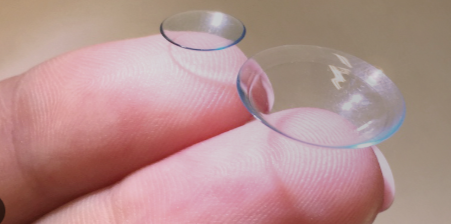
Corneal RGP lenses are smaller lenses that rest directly on the cornea. They can provide excellent vision for many patients and may be appropriate depending on the shape and condition of the cornea.
Scleral lenses are larger lenses that vault over the cornea and rest on the sclera. They can be particularly useful when the corneal surface is highly irregular or when a patient has difficulty tolerating a corneal RGP lens.
There is no single lens that is best for every patient. Our doctors evaluate your eyes and discuss the options that make the most sense for your individual needs.
Who May Benefit From Specialty Contact Lenses?
Specialty contact lenses may be considered for patients with:
Keratoconus
Irregular corneas
High or unusual prescriptions
Significant astigmatism
Corneal scarring
Previous corneal procedures
Difficulty achieving clear vision with glasses
Difficulty wearing conventional contact lenses
Contact lens intolerance
Other conditions that affect the shape of the cornea
A specialty lens fitting begins with an evaluation to determine whether this type of vision correction is appropriate for you.
Our Specialty Contact Lens Evaluation
We take a personalized approach to specialty contact lens fittings.
1. Comprehensive Eye & Corneal Evaluation
We evaluate your vision, eye health, corneal shape, current prescription, and previous contact lens experience.
2. Discuss Your Goals
Tell us what you want to improve—whether that's sharper vision, greater comfort, better night vision, or finding an alternative to glasses or your current lenses.
3. Determine the Appropriate Lens
Based on your eyes and visual needs, we may recommend a scleral lens, corneal RGP, or another specialty lens design.
4. Customized Fitting
Specialty lenses require careful measurements and evaluation. We assess lens positioning, movement, clearance, comfort, and vision to help determine the appropriate fit.
5. Follow-Up & Refinement
Finding the right specialty lens can sometimes require adjustments. We monitor your vision, comfort, and eye health and make refinements when appropriate.
What If I've Already Been Diagnosed With Keratoconus?
If you already have a keratoconus diagnosis, bring your previous eye-care records and current lenses to your appointment whenever possible.
If your current lenses are uncomfortable, your vision is changing, or you're having difficulty wearing them for a full day, let us know. We can evaluate your current situation and discuss whether a different specialty lens design may be appropriate.
If you have been told that your keratoconus is progressing, your eye doctor may also recommend additional corneal evaluation or referral for treatments intended to address disease progression.
Our role is to help optimize your vision and contact lens comfort while coordinating with ophthalmology or corneal specialists when additional medical treatment is needed.
Keratoconus Care for Patients in West Hills & Moorpark
Eyes on LA Optometry provides specialty contact lens services at both of our locations.
West Hills—>
Eyes on LA Optometry
7325 Medical Center Dr., Suite 208
West Hills, CA 91307
Our West Hills office serves patients throughout West Hills and nearby communities, including Woodland Hills, Canoga Park, Calabasas, Chatsworth, Winnetka, and the surrounding San Fernando Valley.
Moorpark—>
Eyes on LA Optometry
251 W Los Angeles Ave
Moorpark, CA 93021
Our Moorpark office serves patients throughout Moorpark and nearby Ventura County communities, including Simi Valley, Thousand Oaks, Newbury Park, and surrounding areas.
Frequently Asked Questions About Keratoconus & Scleral Lenses
-
Scleral lenses can provide vision correction for many patients with keratoconus by creating a smooth optical surface over the irregular cornea. They do not cure keratoconus or necessarily stop the condition from progressing.
-
Many patients find scleral lenses comfortable once they are properly fitted and they become accustomed to inserting, removing, and caring for them. Comfort varies from person to person, which is why individualized fitting and follow-up are important.
-
For some patients, scleral lenses can provide significantly clearer and more stable vision than glasses because they can compensate for irregularities in the corneal surface. However, the best option depends on the individual patient's eyes and needs.
-
Many patients are able to wear properly fitted scleral lenses for extended periods, but wearing time varies. Your doctor will discuss an appropriate wear schedule based on your eyes, lens fit, comfort, and ocular health.
-
Yes. We provide specialty contact lens evaluations and fittings for patients with keratoconus, irregular corneas, high prescriptions, and other challenging vision needs.
-
No. Scleral lenses may be appropriate for a variety of corneal and vision conditions. Your doctor can determine whether they are appropriate for your eyes.
-
Potentially. Patients who have struggled with conventional soft or corneal RGP lenses may be candidates for scleral lenses, depending on their eye health and individual circumstances.
-
No. Scleral lenses primarily provide vision correction and are not a treatment designed to stop the underlying progression of keratoconus. Patients with suspected or progressing keratoconus should receive appropriate medical evaluation and monitoring.
Personalized Specialty Contact Lens Care
Living with keratoconus can make finding comfortable, reliable vision correction frustrating. You don't have to assume that glasses or conventional contact lenses are your only options.
At Eyes on LA Optometry, we take the time to understand your eyes, your previous contact lens experience, and your visual goals.
If you're looking for scleral lenses for keratoconus in West Hills or Moorpark, contact our office to schedule a specialty contact lens evaluation.